
Categories

Explore
Sort by

Explore
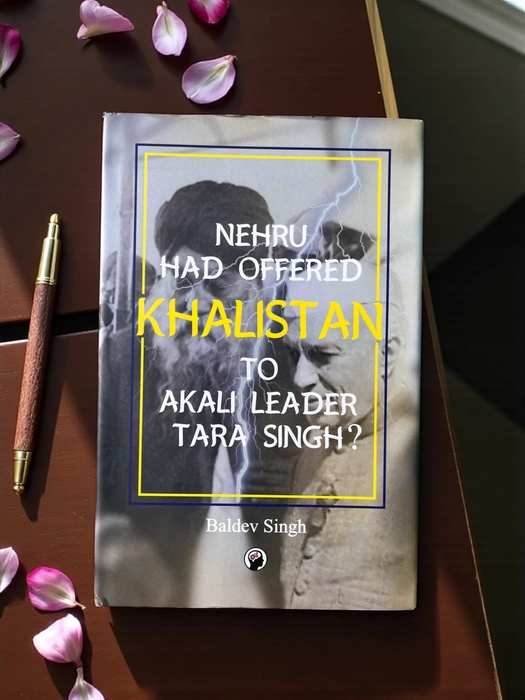
Product details
Author: Baldev Singh
Subject: The political history surrounding India’s partition, Sikh demands, Congress leadership’s promises, and the controversial claim that Jawaharlal Nehru once privately offered an independent Sikh state (Khalistan) to Master Tara Singh.
This book is based on historical documents, political memoirs, assembly debates, and statements from the 1940s–60s.
The author examines:
What Sikh political aspirations were during Partition
What Congress leaders (especially Nehru) promised to the Sikhs
Why Master Tara Singh rejected certain proposals
Whether the offer of “Khalistan” was real or political manoeuvring
How these events shaped later Sikh grievances and demands
The book challenges the mainstream narrative taught in Indian history.
Before Partition:
Sikhs demanded a federal structure with strong state powers
They feared domination by Hindu-majority India
They also rejected Jinnah’s proposal of joining Pakistan
Congress leaders courted Sikh support to strengthen the nationalist movement
Baldev Singh explains that Sikhs were “used” politically but not given real guarantees.
The book focuses on the controversial point:
“If Sikhs want a separate state, the Congress will have no objection.”
According to the author, this “offer” was made:
In private conversations
To secure Sikh support against the Muslim League
When Congress needed Sikh votes during constitutional negotiations
Baldev Singh argues that Nehru’s statement was not a formal proposal, but an informal political promise that held deep implications.
According to the book, Tara Singh refused because:
He trusted Congress assurances
He believed Sikhs would get full cultural, linguistic, and political autonomy within India
The term “Khalistan” was not fully defined
Sikh leadership was internally divided
They lacked geographic contiguity for a stable independent state
Baldev Singh critiques Tara Singh’s trust in Nehru, calling it a historic miscalculation.
The book argues:
Congress did not honour its assurances to Sikhs
Punjabi Suba movement was resisted for 15 years
Sikh political demands were labelled “separatist”
The Anandpur Sahib Resolution (1973) was demonised
Sikh fears of centralisation became reality
Baldev Singh claims that the gap between promises and actions created the long-term Sikh political distrust toward Delhi.
The author cites:
Statements from Congress leaders
Correspondence between Nehru and Sikh leaders
British records
Contemporary newspaper reports
Autobiographical references from Sikh politicians
He argues that Nehru’s “offer” was politically motivated, not constitutional.
The book raises deeper questions:
Was Nehru sincere or only playing political chess?
Did Sikh leaders fail to negotiate strongly?
Would accepting Khalistan in 1947 have prevented future Sikh grievances?
How did this broken promise affect 1980s Sikh activism?
Baldev Singh suggests it was:
“A lost chance for the Sikhs and a strategic move by Nehru.”
Baldev Singh’s book argues that Jawaharlal Nehru informally offered an independent Sikh state (“Khalistan”) to Master Tara Singh before 1947 to gain Sikh support against the Muslim League. Tara Singh declined the offer, trusting Congress promises of autonomy within India. After independence, those promises were not honoured, leading to decades of Sikh political disillusionment. The book portrays the episode as a mix of political opportunism, misplaced trust, and a turning point in Sikh–Centre relations.
Similar products
